The 2025 Turkey Drug Report Has Been Published

The 2025 Turkey Drug Report, prepared by the Directorate General of Security’s Department for Combating Narcotics Crimes, has been published.

The fight against drugs is an issue that requires an effective, simultaneous approach across the areas of combating supply, prevention/education, and treatment/rehabilitation.

For the efforts undertaken in this context to be successful, it is essential that all institutions and organizations work together. Furthermore, fostering public awareness and raising awareness are just as important as the measures taken to address the challenges encountered in the fight against drugs.

Constantly evolving and changing technology is altering not only the nature of crimes but also the methods used to commit them. Law enforcement agencies, which utilize these evolving technologies and methods in the fight against crime, are no longer limited to combating local crime hotspots.

The assessments made in the report are based solely on law enforcement arrests. Therefore, it is not possible to conclude from this data whether drug addiction is increasing or decreasing. The data presented may provide insight into law enforcement performance.

Thanks to globalization and technology, criminal networks in our world—which has become as small as a village—are now more organized and multinational in nature. For this reason, the fight against drugs is no longer merely a national issue but has taken on an international dimension.

As a result of this approach, the 2025 Turkey Drug Report—prepared using 2024 data with contributions from the relevant institutions—highlights the efforts undertaken across all areas of the fight against drugs.

Click here to access the report.

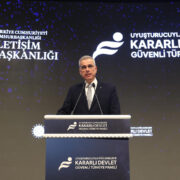
Health Minister Prof. Dr. Kemal Memişoğlu participated in the “Panel on a Resolute State and a Safe Turkey in the Fight Against Drugs,” organized by the Presidency’s Communications Directorate.

Health Minister Prof. Dr. Kemal Memişoğlu participated in the “Panel on a Resolute State and a Safe Turkey in the Fight Against Drugs,” organized by the Presidency’s Communications Directorate, on Thursday, January 29, 2026.

In his opening remarks at the panel, Health Minister Memişoğlu stated that addiction is a serious disease that threatens human health in many ways. Minister Memişoğlu emphasized that addiction weakens an individual’s willpower, distances the person from social responsibilities, and leads to permanent health problems over time.

Health Minister Memişoğlu noted that the effects of drugs and other forms of addiction are not limited to individuals alone, stating, “They lead to social problems in many areas, from security to health, and from the economy to justice. “For this reason, combating addiction requires a multi-layered and comprehensive approach,” he said.

Health Minister Kemal Memişoğlu, noting that efforts to combat addiction are being resolutely continued under the leadership of President Recep Tayyip Erdoğan and in collaboration with all state institutions, stated that “the 2024–2028 National Strategy Document and Action Plan for Combating Drug Abuse” stated that all types of addiction are being comprehensively addressed.

Minister Memişoğlu, speaking on behalf of the Ministry of Health, stated that the ministry does not view its responsibilities in the fight against addiction as limited to diagnosis and treatment alone, and emphasized that preventive and protective health services are at the heart of its policies. Minister Kemal Memişoğlu noted that awareness, guidance, and healthy living programs targeting all segments of society—especially children and young people—form the foundation of this fight.

Health Minister Memişoğlu, who also provided information on the treatment and rehabilitation infrastructure, noted that services are currently provided at a total of 143 AMATEM and ÇEMATEM facilities in Turkey—64 of which are inpatient and 79 outpatient—with a total bed capacity of 1,582. Minister Memişoğlu stated that support and counseling services continue to be provided at 188 Community Mental Health Centers and BAHAR (Rehabilitation Centers for Addicted Patients) units.

Highlighting that the Sancaktepe Healthy Living Village project, launched under the patronage of Mrs. Emine Erdoğan, serves as an important model in the fight against addiction, Health Minister Memişoğlu stated that at this 200-bed facility, treatment, detoxification, and rehabilitation processes are integrated under one roof and addressed through a holistic approach. Minister Memişoğlu noted that the Healthy Living Village project aims not only to provide treatment but also to reintegrate individuals who have overcome substance abuse into society through the facility’s therapy gardens, swimming pool, living villas, library, and vocational development workshops.

Addressing the issue of combating tobacco addiction, Health Minister Memişoğlu noted that, with the goal of a tobacco-free and smoke-free Turkey, they had increased the number of smoking cessation clinics from 467 to over 1,250 in the past year. Minister Memişoğlu reminded the public that free counseling services are available 24 hours a day, 7 days a week, through the “ALO 171 Smoking Cessation Helpline” and the “ALO 191 Drug Abuse Prevention and Support Helpline.”

Emphasizing that they have adopted a “zero-tolerance” approach toward any form of communication that encourages addiction, Health Minister Memişoğlu highlighted the importance of an accurate, responsible, and people-centered approach to communication across all platforms, particularly on social media. Kemal Memişoğlu stated that the Ministry of Health is collaborating with the Ministry of Justice, the Ministry of Family and Social Services, the Presidency’s Communications Directorate, and the Information and Communications Technologies Authority to combat misleading content that encourages addiction on digital media platforms.

At the conclusion of his speech, Health Minister Kemal Memişoğlu, referring to the “Healthy Turkey Century” vision, stated that “Health That Protects, Develops, and Produces” policies would be resolutely pursued in line with the goal of building a strong society composed of healthy individuals.

Turkey’s Role in the Fight Against Drugs


Drug trafficking in our country has become a form of crime that transcends national borders and operates at the regional and international levels.

The rise in the number of drug addicts worldwide, the high profit margins in drug trafficking, the growing efforts by terrorist organizations to secure a share of these profits, and technological advancements have turned the problem of drug production and trafficking into a comprehensive global challenge. For this reason, it is emphasized that solving the drug problem requires international cooperation and is a shared responsibility…

Turkey approaches this issue with this understanding and, in addition to its efforts at the national level, is joining forces at the regional and global levels to significantly strengthen its efforts

Support. Due to Turkey’s geographical location, which makes it a transit route for drug traffickers transporting drugs originating in Asia to European drug markets, our country has played a significant role in this fight on the international stage. As a result, our country’s successful fight against smuggling networks has prevented drugs from transiting through our territory. Consequently, the operations carried out, the smuggling networks dismantled, and the drugs seized have forced traffickers involved in these activities to seek alternative routes.

Turkey has signed more than 200 documents—including the 1961 treaty and subsequent agreements—containing provisions on cooperation in the fight against drugs with 106 countries. For this reason, officials are stationed in European countries to liaise with Turkish nationals and foreign nationals from various countries residing in Turkey.The Agreement between Turkey and the European Commission on the Control of Precursor Chemicals Frequently Used in the Manufacture of Illicit Drugs entered into force on April 28, 2004. In line with our national needs and our obligations during the European Union accession process, the “National Policy and Strategy Document on Addictive Substances and the Fight Against Addiction,” covering the years 2006–2012, which entered into force on November 20, 2006. This Strategy Document envisaged the development of two separate Action Plans, each covering a three-year period. The First National Action Plan on Drugs (2007–2009) was implemented, and the Second National Action Plan (2010–2012) entered into force on November 9, 2010.

A high-level, multi-stakeholder effort has been launched in our country to combat synthetic cannabinoid-derived drugs. In line with this approach, the Emergency Action Plan and Strategy Document for the Fight Against Drugs was first prepared in 2015, followed by the National Action Plan and Strategy Document for the Fight Against Drugs covering the 2016–2018 period. Finally, the 2018–2023 National Strategy Document and Action Plan for the Fight Against Drugs was developed, outlining a roadmap for the fight against drugs through 2023 and aiming to ensure nationwide coordination.

Bahattin DEMİRAY

Vice President of the POLEM Club


We're ready to listen to you

The Scope of the Fight Against Addiction Is Expanding

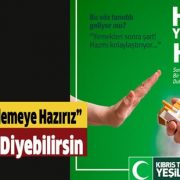
The Turkish Cypriot Yeşilay Association, which combats addictions to cigarettes, alcohol, drugs, gambling, and technology—all of which are harmful to human health—is helping people overcome their addictions through its Yeşilay Counseling Center (YEDAM) project, launched under the slogans “We’re Here to Listen to You” and “You Can Say ‘No!’ You Can Say No!”—is helping individuals overcome their addictions through the Yeşilay Counseling Center (YEDAM) project.

Approximately 40 people have applied to the center, which was established as part of a project that has been ongoing since last May and provides free services. The center, which currently serves those seeking to overcome tobacco, alcohol, and substance addictions, will soon begin accepting applications from those seeking to overcome gambling addiction as well. YEDAM can be reached by calling 444 7975.


Minister Selçuk announced: We will implement it

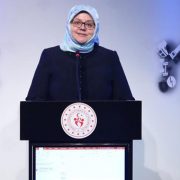
Zehra Zümrüt Selçuk, Minister of Family, Labor, and Social Services, announced that they will implement the Addiction Treatment Service Model (BAHAR)—which takes a holistic approach to rehabilitation and reintegration as part of the fight against drug addiction—in collaboration with the Ministry of Health.

The third meeting of the “Stay Active, Stay Safe” project, organized by the Radio and Television JournalistsAssociation (RTGD) with the support of the Ministry of Youth and Sports and the Ministry of the Interior, was held in the Ministry of Youth and Sports Conference Hall.

In his speech here, Selçuk pointed out that cigarettes, alcohol, drugs, and substance abuse cause the greatest harm to human and public health, and emphasized that addiction is one of the most significant problems threatening not only the individual but also the family and the social fabric.

Noting that protecting young people and their families from drug and substance abuse and taking preventive measures is everyone’s shared responsibility, Selçuk stated that they are conducting the fight against addiction in full coordination with the relevant public institutions.

TURKEY UNIVERSITY STUDENT PROFILE SURVEY

Minister Selçuk emphasized that the Ministry of Family, Labor, and Social Services has assumed responsibility in the areas of research, social integration, and demand reduction, and announced that they have completed the Turkey University Youth Profile Survey (TÜGPA) aimed at determining the prevalence of drug use.

Noting that the study is the first of its kind in the country to focus exclusively on young people and youth, Selçuk explained that more than 20,000 young people from 68 different universities in 33 provinces participated in the study.

“WE WILL BRING ‘BAHAR’ TO LIFE”

Noting that they had conducted on-site assessments regarding drug use with the assistance of staff from the Social Support Program (ASDEP), Selçuk continued his remarks as follows:

“In the fight against drug addiction, ensuring that individuals reintegrate into social life after treatment and preventing them from relapsing are just as important as the treatment itself. To this end, our Ministry has established 21 social reintegration units across 19 provinces. At these units, we provide daytime services to all individuals aged 18 and older who have completed short- or long-term treatment and who volunteer to participate. To enhance the effectiveness of our units, we are creating spaces where those who benefit from these services can spend their free time and participate in work and occupational therapy. We will also implement the Addiction Treatment Service Model (BAHAR), which brings a holistic approach to rehabilitation and reintegration processes, in collaboration with the Ministry of Health. The process is nearing completion. We believe that once we implement this program, our existing social reintegration units will operate more effectively and actively.”

Zehra Zümrüt Selçuk, noting that they are conducting initiatives to combat all forms of addiction that hinder children’s healthy development, said, “We have specialized 13 of our child support centers across the country (ÇODEM), we have specialized 13 of them to ensure that the treatment and rehabilitation processes for our children with substance use disorders are carried out properly.”

Noting that they collaborate with the Ministry ofNational Educationon behalf of children under protection and care at child support centers, Selçuk stated that they refer young people and children who are not enrolled in formal education to vocational training programs through İŞKUR.

ANKA CHILD SUPPORT PROGRAM

Selçuk announced that they had developed the Anka Child Support Program with the aim of helping the children residing at ÇODEM overcome the traumas they have experienced, acquire life skills, and foster their personal development in an environment of well-being and happiness.

Selçuk, highlighting the importance of the family in preventing substance abuse, noted that they had distributed the book they had prepared, titled “Substance Use Risk and Prevention of Substance Dependence,” in all provinces.

Selçuk provided information about the training activities conducted to date on this topic.

Noting that young people are the future of the country and the nation, Selçuk stated that, guided by reason and science and through their faith and exemplary moral character, they will lead humanity forward.

“WE CREATED THIS PROJECT TO KEEP YOUNG PEOPLE AWAY FROM ADDICTION”

Şebnem Bursalı, President of the Radio, Television, and Newspaper Journalists’ Association, also celebrated “January 10, Working Journalists’ Day,” and explained that they have launched an awareness project to help keep young people away from substance abuse and channel their energy in the right direction.

The resident of Bursa thanked those who contributed to the project, particularly Emine Erdoğan, the wife of Turkish President Recep Tayyip Erdoğan.

The event was also attended by Mehmet Muharrem Kasapoğlu, Minister of Youth and Sports, and Süleyman Soylu, Minister of the Interior.