Proposal for a New Institution to Combat Substance Abuse
Grand National Assembly of Turkey – YILDIZ AKTAŞ
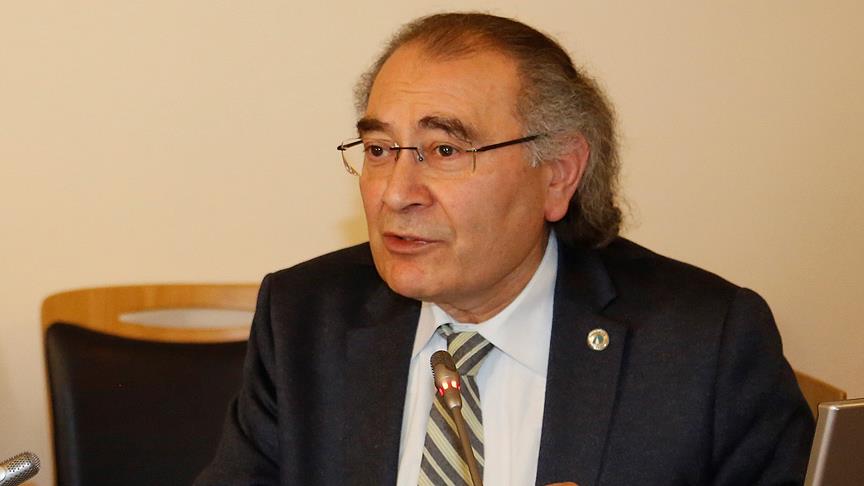
Prof. Dr. Nevzat Tarhan, Rector of Üsküdar University, proposed the establishment of an institution—similar tothe“EPDK” or “TMSF“—that could centrally manage policies related to substance abuse in the fight against addiction.
In a statement to an AA reporter, Tarhan said that he had given a presentation on substance abuse to the Turkish Grand National Assembly’s Commission on Substance Abuseand had submitted a report outlining the problems and proposed solutions.
Tarhan, who stated that establishing such a commission on substance abuse would be very appropriate, said that substance use affects the brain’s plasticity and causes damage to the brain by disrupting its chemical structure.
Tarhan, noting that brain damage can be measured using neuroimaging techniques, drew attention to the fact that adolescence in particular is a high-risk period for addiction and stated that research focused on early adolescence should be expanded.
Tarhan, noting that during the period when young people are searching for their identity—and in the process of seeking attachment and a sense of belonging—they can turn substances into objects of attachment, recalled that the report on substance addiction published by the Presidential State Audit Board in 2014 recalled that the report proposed measures to combat the problem under the headings of “reducing supply, demand, and harm.”
Tarhan, noting that the police have been carrying out significant efforts to reduce supply, pointed out that efforts to reduce demand have always taken the form of treatment programs and that this process is costly. Explaining that developed countries have rehabilitation centers—such as health villages—where people stay for extended periods, Tarhan said, “Without rehabilitation centers, we cannot treat addicted patients or reintegrate them into society. “Addicts who have undergone treatment often relapse and are readmitted after a certain period of time on the streets. For this reason, a structured rehabilitation program is necessary,” he said.
Tarhan, emphasizing that everyone must contribute to reducing substance abuse, noted that they had listed numerous recommendations on this issue in their presentation to the committee.
Tarhan listed the recommendations included in the report as follows:
“The probation system should be made fully operational, and validation laboratories should be established for the tests used to detect substance abuse and expanded in accordance with the principle of efficiency.”
The number of rehabilitation centers should be increased, and a structured rehabilitation system should be established.
Schools should offer courses in positive psychology, communication skills, and media literacy, starting at the elementary and middle school levels.
In the context of pleasure management as a countermeasure to consumerism, children should be taught psychological resource management as early as elementary school, because consumption addiction precedes substance addiction.
Resource management training is character development training. Self-management skills should be aimed not only at academic success but also at success in life—that is, the goal of becoming a good person.
In addition to strategies to combat illicit drugs, preventive strategies should be developed.
Targeted programs addressing drug use among specific age groups should be established. While there are policies in Europe aimed at older adults, policies in Turkey have primarily been developed for young people. Policies targeting older adults should also be developed.
Research on substance abuse should be expanded.
NGOs should be encouraged to contribute to awareness-raising efforts.
In addition to Yeşilay, there should be other organizations addressing the drug problem in Turkey. An institution similar to the U.S.-based NIDA (National Institute on Drug Abuse)—which can coordinate a unified approach to addiction policies—or organizations like Turkey’s EPDK and TMSF needs to be established.
We should ensure that the term “substance” is used instead of “drug,” because the term “drug” can be risky and enticing for young people.
Family relationships should be strengthened; the risk of substance use also increases in families with poor communication.
“Policies on substance use, particularly regarding cannabis and its synthetic derivatives, should be implemented. Treatment programs for cannabis users, similar to those in Europe, should be developed.”
https://aa.com.tr/tr/politika/-madde-bagimliligiyla-mucadelede-yeni-kurum-onerisi/1054137