Posts

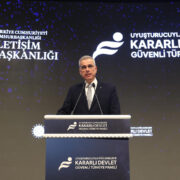
Health Minister Prof. Dr. Kemal Memişoğlu participated in the “Panel on a Resolute State and a Safe Turkey in the Fight Against Drugs,” organized by the Presidency’s Communications Directorate.

Health Minister Prof. Dr. Kemal Memişoğlu participated in the “Panel on a Resolute State and a Safe Turkey in the Fight Against Drugs,” organized by the Presidency’s Communications Directorate, on Thursday, January 29, 2026.

In his opening remarks at the panel, Health Minister Memişoğlu stated that addiction is a serious disease that threatens human health in many ways. Minister Memişoğlu emphasized that addiction weakens an individual’s willpower, distances the person from social responsibilities, and leads to permanent health problems over time.

Health Minister Memişoğlu noted that the effects of drugs and other forms of addiction are not limited to individuals alone, stating, “They lead to social problems in many areas, from security to health, and from the economy to justice. “For this reason, combating addiction requires a multi-layered and comprehensive approach,” he said.

Health Minister Kemal Memişoğlu, noting that efforts to combat addiction are being resolutely continued under the leadership of President Recep Tayyip Erdoğan and in collaboration with all state institutions, stated that “the 2024–2028 National Strategy Document and Action Plan for Combating Drug Abuse” stated that all types of addiction are being comprehensively addressed.

Minister Memişoğlu, speaking on behalf of the Ministry of Health, stated that the ministry does not view its responsibilities in the fight against addiction as limited to diagnosis and treatment alone, and emphasized that preventive and protective health services are at the heart of its policies. Minister Kemal Memişoğlu noted that awareness, guidance, and healthy living programs targeting all segments of society—especially children and young people—form the foundation of this fight.

Health Minister Memişoğlu, who also provided information on the treatment and rehabilitation infrastructure, noted that services are currently provided at a total of 143 AMATEM and ÇEMATEM facilities in Turkey—64 of which are inpatient and 79 outpatient—with a total bed capacity of 1,582. Minister Memişoğlu stated that support and counseling services continue to be provided at 188 Community Mental Health Centers and BAHAR (Rehabilitation Centers for Addicted Patients) units.

Highlighting that the Sancaktepe Healthy Living Village project, launched under the patronage of Mrs. Emine Erdoğan, serves as an important model in the fight against addiction, Health Minister Memişoğlu stated that at this 200-bed facility, treatment, detoxification, and rehabilitation processes are integrated under one roof and addressed through a holistic approach. Minister Memişoğlu noted that the Healthy Living Village project aims not only to provide treatment but also to reintegrate individuals who have overcome substance abuse into society through the facility’s therapy gardens, swimming pool, living villas, library, and vocational development workshops.

Addressing the issue of combating tobacco addiction, Health Minister Memişoğlu noted that, with the goal of a tobacco-free and smoke-free Turkey, they had increased the number of smoking cessation clinics from 467 to over 1,250 in the past year. Minister Memişoğlu reminded the public that free counseling services are available 24 hours a day, 7 days a week, through the “ALO 171 Smoking Cessation Helpline” and the “ALO 191 Drug Abuse Prevention and Support Helpline.”

Emphasizing that they have adopted a “zero-tolerance” approach toward any form of communication that encourages addiction, Health Minister Memişoğlu highlighted the importance of an accurate, responsible, and people-centered approach to communication across all platforms, particularly on social media. Kemal Memişoğlu stated that the Ministry of Health is collaborating with the Ministry of Justice, the Ministry of Family and Social Services, the Presidency’s Communications Directorate, and the Information and Communications Technologies Authority to combat misleading content that encourages addiction on digital media platforms.

At the conclusion of his speech, Health Minister Kemal Memişoğlu, referring to the “Healthy Turkey Century” vision, stated that “Health That Protects, Develops, and Produces” policies would be resolutely pursued in line with the goal of building a strong society composed of healthy individuals.
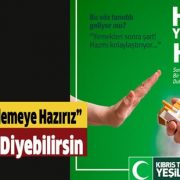
We're ready to listen to you

The Scope of the Fight Against Addiction Is Expanding

The Turkish Cypriot Yeşilay Association, which combats addictions to cigarettes, alcohol, drugs, gambling, and technology—all of which are harmful to human health—is helping people overcome their addictions through its Yeşilay Counseling Center (YEDAM) project, launched under the slogans “We’re Here to Listen to You” and “You Can Say ‘No!’ You Can Say No!”—is helping individuals overcome their addictions through the Yeşilay Counseling Center (YEDAM) project.

Approximately 40 people have applied to the center, which was established as part of a project that has been ongoing since last May and provides free services. The center, which currently serves those seeking to overcome tobacco, alcohol, and substance addictions, will soon begin accepting applications from those seeking to overcome gambling addiction as well. YEDAM can be reached by calling 444 7975.


Grand National Assembly of Turkey Commission on Substance Abuse: Seize the Assets of Drug Traffickers

Grand National Assembly of Turkey – COŞKUN ERGÜL

The Commission on Substance Abuse Research called for the seizure of assets belonging to individuals accused of drug trafficking , just as is done with public employees, on the grounds that they acquired their assets unlawfully.

The Parliamentary Research Commission on Substance Abuse—established to investigate new forms of addiction and identify the causes of addiction and the measures to be taken—made several recommendations to the Ministry of Justice, which had presented a report to the commission.

It is noted that when a public employee is found to possess disproportionate assets, and if that person has failed to declare them in a timely manner, the state may seize the assets in question on the grounds of unjust enrichment, and that the burden of proof in such cases shifts to the public employee; it was also stated that a similar measure applied to public employees would be appropriate to apply to individuals accused of drug trafficking.

The Commission proposed that “assets confiscated in connection with drug trafficking/smuggling offenses could be used for the treatment and rehabilitation of drug addicts, thereby helping to reintegrate into society those harmed by drug traffickers.”

“The scope of mandatory broadcasts should be expanded”

It was emphasized that the scope of the mandatory public service announcements to be published under the relevant law should be expanded to include forms of addiction other than tobacco.

The Commission’s other recommendations are as follows:

– Measures should be taken to prevent offenders who return to their high-risk social environment after release from resuming substance use or committing substance-related crimes.

– It has been noted that self-harming behavior is occasionally observed among convicted offenders and detainees with substance use disorders. It would be appropriate to expand programs aimed at teaching psychosocial life skills that will help reduce such behaviors.

“Let İŞKUR provide information”

– To ensure that inmates scheduled for release from prisons and individuals under probation are made aware of the support services provided by the Turkish Employment Agency (İŞKUR) and to enable them to benefit from these services, visits by İŞKUR officials to relevant institutions to provide information to inmates and individuals under supervised release should be expanded.

– It has been observed that there is a lack of sufficient scientific research in Turkey that comprehensively addresses the current situation regarding recidivism and updates its findings at regular intervals. Consequently, there is a lack of evidence-based data needed to develop policies that would determine what responsibilities institutions and organizations should assume in preventing recidivism. It is recommended that an “Institute of Criminal Justice” be established to address crime prevention. It would be appropriate for judicial institutions and organizations within the Turkish criminal justice system to take the recommendations of this academic body into account in their work and to establish a scientific database.

– As a solution to the problem of long wait times for test results for individuals subject to supervised release, having laboratories dedicated solely to this process would enable results to be obtained quickly. It should not be forgotten that detecting drugs in bodily fluids and verifying such detections require different equipment, and that centers with these capabilities are costly; however, establishing such centers is crucial to ensuring that individuals can be integrated into the treatment system in a timely manner.

“Let’s expand social integration centers”

– The social integration centers, launched as a pilot program by the Ministry of Family and Social Policies, could be expanded. Efforts should be made to ensure these centers remain true to their primary purpose, operate on a voluntary basis, and are equipped with the necessary programs to encourage children and youth to participate in them.

– For individuals placed on probation due to illegal substance use who have been diagnosed with “substance dependence,” the treatment and follow-up phases are managed by the Ministry of Health. For other probationers—such as users or dealers—who do not require treatment, substance analysis conducted to monitor and track illicit substance use is treated separately from standard medical laboratory practices due to the criminal nature of the case, the fact that the samples are considered forensic evidence, and their use for the purpose of criminal prosecution. For this reason, it would be appropriate for the substance analyses in question to be conducted in forensic toxicology laboratories within the Ministry of Justice and universities.

Grand National Assembly of Turkey Substance Abuse Research Commission: 70 percent of those who have tried it once continue to use it

The Parliamentary Research Commission, established to investigate drug addiction and new forms of addiction in order to identify the causes of addiction and determine the necessary measures, convened under the chairmanship of Yılmaz Tezcan, AK Party Member of Parliament for Mersin.

At today’s meeting of the commission, Prof. Dr. İlhan, Dean of the Faculty of Health Sciences at Gazi University, gave a presentation on the communication aspect of the fight against drugs.

İlhan said that presenting the drug problem to the public by linking it to terrorism would contribute to the fight against drugs.

Noting that the fight against drugs begins with supply reduction and that law enforcement agencies are working diligently on this front, İlhan stated that demand reduction is the issue that deserves the most attention in this fight.

Emphasizing that the Ministry of Health, the Ministry of Youth and Sports, and the Presidency of Religious Affairs have a major role to play in reducing demand, İlhan said, “At this very point, communication emerges as the most important factor. “We need to set a goal for ourselves regarding demand reduction. We must recognize that this will require a multi-sectoral effort. We must make excellent use of our communication channels,” he said.

Explaining that the 15–24 age group constitutes the most significant at-risk population for drug addiction, İlhan emphasized that all efforts should be directed toward this group. İlhan stated, “This is the area where cooperation among families, civil society organizations, the government, and the media is most essential.” “Research has shown that 70 percent of people who have tried drugs at least once continue to use them. This highlights the importance of never starting to use drugs in the first place as the primary preventive measure,” he said.

Prof. Dr. Mustafa Necmi İlhan emphasized the need to raise awareness about healthy living and the importance of preparing a guide for the media.

Noting that public service announcements on the fight against drugs could be produced for high-traffic websites, İlhan said, “A unified approach is one of the key components of this fight. We must continue our efforts using a model tailored to Turkey’s specific context, taking these challenges into account. “Shared values and inter-institutional cooperation are crucial in this fight. We need to constantly adapt as drug dealers find new ways to operate,” he said.

– “It is important for the media to come together in a shared sense of responsibility”

Yeşim Sert Karaaslan, a senior correspondent for the Anadolu Agency (AA) and vice president of the Health Communication Association, said that the media, along with society, has a major role to play in the fight against substance abuse.

Karaaslan, noting that ensuring effective communication is crucial and that the media plays a vital role in conveying information to the target audience, “For the accurate transmission of information to individuals and society, the provision of appropriate guidance, and the raising of awareness, it is important for the media to come together with a shared sense of responsibility,” he noted.

In news reports, Karaaslan emphasized that the economic value of the item should not be mentioned so as not to encourage such behavior; instead, he suggested that using terms like “bag,” “package,” or “kilogram” could help prevent those seeking to profit from this illegal activity from being encouraged to do so.

Explaining that the use of a common language in the news could be seen as another important element in the struggle, Karaaslan noted the following:

“A workshop to be held with the participation of provincial media representatives, in the spirit of shared awareness, will contribute to advocacy efforts. In many developed countries, there are journalists who specialize in diplomacy, education, and health. A journalist who is an expert in this field is well-versed in the health literature, knowledgeable about relevant legislation, and much more experienced. The media can conduct training in this area internally, or it can collaborate with relevant professional organizations and civil society organizations to hold workshops.”

– “Concerns about ratings have become alarming”

Aslan Değirmenci, President of the International Media and Information Association, said that government agencies need to develop a common language of communication with media representatives, particularly regarding the fight against drugs.

Değirmenci noted that there is significant conceptual confusion in the media and suggested that reporters in the field could be trained to put an end to this confusion.

Değirmenci, noting that when press and media centers reviewed their news archives, they found that 30,000 news stories related to this field were published each year, said, “That is truly a very high number. In 70 percent of these news stories, users are described with terms such as ‘trapped,’ ‘stuck in a quagmire,’ ‘victim,’ ‘young,’ or ‘child-aged.’ Users are generally portrayed as dangerous lunatics. We must break free from this othering,” he said.

Değirmenci argued that the media’s obsession with ratings has reached alarming levels, leading to highly sensationalized news stories. Emphasizing that this practice—carried out solely to boost viewership—must be abandoned, Değirmenci said:

“Anadolu Agency has not been providing its subscribers with suicide-related news for about three years. This is a positive development. We have observed that the number of suicide-related news stories in the media has dropped by 60 percent as a result of the agency’s decision not to provide such reports to its subscribers. We are also seeing a decrease in suicide incidents following the agency’s assumption of this responsibility. All media organizations must demonstrate the same sensitivity regarding substance abuse. I must point out, however, that the number of news stories aimed at increasing the demand for treatment in the fight against addiction is virtually nonexistent. We need to engage in this self-criticism.”

Meanwhile, representatives from the Prime Ministry’s General Directorate of Press, Publications, and Information, the General Directorate of the Turkish Employment Agency, and the Presidency of the Radio and Television Supreme Council also briefed the commission on their institutions’ operating principles and ongoing projects.

http://www.star.com.tr/guncel/tbmm-madde-bagimliligi-arastirma-komisyonu-haber-1323080/

The Turkish Grand National Assembly’s Commission on Substance Abuse Research convened

Grand National Assembly of Turkey

Prof. Dr. Sevil Atasoy, Vice Rector of Üsküdar University and Director of the Institute of Addiction and Forensic Sciences, stated that approximately 450 metric tons of heroin passed through Turkey last year via the route known asthe “Balkan Route” in the drug trade.

The Parliamentary Research Commission, established to investigate drug addiction and new forms of addiction with the aim of identifying the causes of addiction and determining the necessary measures, convened under the chairmanship of Yılmaz Tezcan , AK Party Member of Parliament for Mersin.

In his presentation during the afternoon session of the meeting, Atasoy noted that heroin produced in Afghanistan is shipped to Russia and Europe, adding that the primary route to Europe is the so-called “Balkan Route,” which passes through Turkey.

Sevil Atasoy stated, “Last year, approximately 450 metric tons of heroin passed through Turkey via this route. We were able to seize part of this heroin, but we were unable to seize the rest.”

Noting that heroin production in Afghanistan has increased by 87 percent compared to last year, Atasoy said, “Turkey is a transit country. But if 450 metric tons of heroin pass through a country—no matter how much you seize, given that our seizure rate is around 40 percent—the remainder, even though it’s destined for Europe, its primary market, will inevitably seek out customers right here on our soil. After all, we’re talking about smuggling that generates enormous profits,” he stated.

Atasoy, who emphasized today that drugs are the primary source of income for illegal organizations in Europe, explained that the drug known as “captagon,” which originates in the Balkans, is transported through Turkey to countries such as Syria, Iraq, Saudi Arabia, and Qatar.

Noting that millions of Captagon tablets had been seized in some provinces in the Southeastern Anatolia Region, such as Hatay and Gaziantep, Atasoy reported that hundreds of Captagon tablets had also been seized in plastic bags in some tunnels near Afrin as part of Operation Olive Branch.

Noting that Captagon—a type of amphetamine derivative—has stimulant properties, makes it easier to resist hunger and thirst, is highly addictive, and is used by terrorist groups, Atasoy said, “Wherever there are terrorist groups or civil wars in the world, we always see that a specific amphetamine derivative is being used there,” he said.

Atasoy, noting that Turkey’s efforts to combat drug production have always been met with great appreciation, continued as follows:

“However, we were unable to counter the demand with the same level of success. This is because, 25 to 30 years ago, we could not have foreseen that addiction would reach this point in this country. This is a belated effort. That said, I would also like to point out that efforts to control supply will be of no use whatsoever if efforts to curb demand are not successful. We need to place far greater emphasis on curbing demand. Curbing demand is an indispensable element of international agreements.”

“The fight against drugs should begin in the preschool years”

Noting that only one in every six people with a drug addiction worldwide is able to receive treatment, Atasoy said that in Turkey, even that is not possible.

Atasoy, who stated that the misuse of prescription drugs or various painkillers inevitably leads to addiction, reported that a significant cause of illnesses and disabilities observed in infants in Turkey is factors such as various medications, smoking, and alcohol used during pregnancy.

Atasoy, who stated that the fight against drugs must be extended to the preschool years, noted that this would be possible through a collaborative effort involving several ministries.

Noting that methods for combating substance abuse vary from country to country, Atasoy said, “There are universal principles for preventive measures, but we need to take a local approach. This local focus is so crucial that the country, province, and district levels alone are not enough—we need to tackle the issue differently at the neighborhood level. “That is why we need to understand our country in such detail,” he said.

“We took pictures the whole time”

Atasoy, who said he was familiar with the fight against drugs over the past 20 years, continued:

“We’ve always taken photos. It’s now clear that taking photos won’t get us anywhere. Because drugs are being used. The age of first drug use has dropped, and violence and murders have increased. These are all interconnected issues. Because there are certain risks, and we can’t do anything to protect people from them. These risks lead us either to substance use, to violence, to major failures, or ultimately to murder. In other words, the fight against drugs is not just about drugs—it’s also a fight against violence.”

Atasoy, who also addressed the risk factors that lead to substance abuse, noted that substance use within the family, a broken home, having a parent in prison, poverty, academic failure, and domestic violence are significant risk factors.

Officials from the General Directorate of Prisons and Detention Centers of the Ministry of Justice, who attended the meeting, also provided information on initiatives such as the Psychosocial Assistance Services of the Correctional Institution, the Individual Intervention Program for Alcohol and Substance Abuse, and the Tobacco, Alcohol, and Substance Abuse Program.

Reporter: Hüseyin Gazi Kaykı


https://aa.com.tr/tr/politika/tbmm-madde-bagimliligi-arastirma-komisyonu-toplandi/1088872